I discovered a new musician who I actually like -- a rarity for me in recent years. His name is Gary Clark Jr. He was one of the blues' performers who played at the White House last week. PBS aired the performance on Monday night. If you like old school blues mixed with a dash of rock 'n' roll, I suggest checking this guy out.
Click here to watch a short video from his White House gig.
Clark reminds me of a mix of Jimi Hendrix and B.B. King. Gritty vocals and some nasty guitar licks shape his sound. He's not overly produced or supported by computerized gadgets, light shows or an army of backup singers. Just a pure sound -- sometimes similar to Chuck Berry, other times Buddy Guy. He also seems to play nice with other types of musicians, which is sometimes a challenge for performers used to staying within their comfort zones.
I found it interesting that Clark uses Epiphone guitars -- the lower-end of the Gibson line. I wondered if that was a statement of his modesty, a good personality trait for any blues player who wants to keep it real. I am sure he can afford a nice Gibson guitar if he wanted one. Then again, there have been some blues players throughout history who have played wonderful guitar licks on instruments that consisted of little more than a block of wood and some rusty strings.
While Clark may upgrade his guitar collection at some point, I hope commercial success doesn't eventually change his music. The world needs more music that comes from the heart and less that is digitally tailored and packaged exclusively for money. It was good to see a new, young musician with the chops and desire to carry on the tradition of the blues. Gives me hope that music will eventually return to what it once was in America.
As a side note, I am glad we finally have a president who, along with being intelligent and a respected writer and speaker, is also cool. Genuinely cool. Not fake-politician-cool. You could tell President Obama was into the blues performances, so much so that he took the microphone and sang a couple bars on the final tune of the night.
Tuesday, February 28, 2012
Monday, February 13, 2012
A profound commercial message
While the Super Bowl gets all of the attention for commercials, this Chipotle-sponsored message that aired during the Grammy's last night absolutely blew me away in terms of substance and creativity. Willie Nelson, a long-time opponent of factory farming, performed the soundtrack, a song called "The Scientist" by Coldplay. Nelson's stripped-down version and creaky vocals were a perfect match for the animated video.
The short film is titled "Back to the Start," and taps into feelings that have been growing inside of some, albeit not enough, people in recent years. We have lost our way during our quest for more of everything -- faster and cheaper food, slicker technologies and greater profits. Whether it is factory farming producing cheap, poor-quality food here and overseas, or hundreds of thousands of Chinese assembling our iPads under horrible working conditions, we have paid an enormous price for so-called modernization. Most people choose to close their eyes to this stuff, which is why the Willie Nelson commercial was so important. It broadens the spectrum of awareness. Forces us in an inspirational way to ponder something most of us rarely ever think about.
I fear we are at the point of no return when it comes to all kinds of technologies and modern methods of doing things. In some ways, technology and other advancements have improved our lives. But who wouldn't go back to a time when a tomato actually tasted like a tomato? Who hasn't felt the urge to rip the cellphone out of some obnoxious person's hand while in line at the coffee shop? Who wouldn't support doctors returning to the days when they made house calls instead of patients having to be herded through some HMO facility's sterile environment?
Many things that exist today in the name of progress have done nothing but make us more vulnerable to illness and have reduced our ability to relate to each other. Making comments on Facebook is not relating to each other. Holding a door for a stranger or making small talk with the person in front of you on line are much better for the soul than tweeting a moronic comment about stubbing your toe while cutting someone off in the adjacent lane. Learning an instrument is better than relying on a computer to hit all the right notes for you. It is more human. In its imperfection, it is perfect and far more enriching. A song, like a tomato, doesn't have to be artificially void of flaws in order for it to do what it was intended to do in the best possible manner.
The Grammy's were kind of interesting last night. I was glad to hear the Foo Fighters actually recorded their last album in their garage with a tape recorder -- not a professional studio with all the digital wonders that often make musicians sound better than they are. I was glad Adele, with her no-nonsense approach to music, was a big winner. And I was glad to see the Chipotle/Willie Nelson short film.
I am just not sure that we can ever go back to the start. That saddens and alarms me just a little more with each passing day. But maybe, through messaging like the Back to the Start film, we can rethink some of the things we currently accept as progressive and expose them for what they really are -- just another way for another company to turn a buck, even if it's not the right thing to do for people, animals, our culture or the planet as a whole. Before you bite into that next McDonald's burger or turn on that iPhone, maybe it would be good to know what went into bringing those things to market.
Click here for information about Willie Nelson and Neil Young's efforts with Farm Aid.
Wednesday, February 8, 2012
Letting go might be the answer
"We must be willing to let go of the life we have planned so as to have the life that is waiting for us."
--E. M. Forster
In the last three years alone, I can point to numerous examples of people arriving at places in their lives that were totally unexpected. The recession drove people like me -- former newspaper journalists -- out of a dying occupation. Some got out while the getting was good, taking buyouts and other incentive packages from large media companies like Gannett Inc. Thousands of others became layoff victims through no fault of their own. Very few of us had any plans related to what we would do next. As the recession dragged on, the anxiety increased.
Some of us are getting by, and some aren't. A rare few are doing better than ever. Many are in limbo, piecing together some sort of existence through odd jobs, freelance work or contract positions. I know of people who are glad to be out of the newspaper business, which was always a hard life with late hours and other tough demands. However, no matter how bad those hours were, and no matter how much we knew the constant pressure from deadlines and dysfunctional newsrooms were horrible for our health, there are probably very few of us who would have left that world on our own. A paycheck and familiar skill set that provide some sort of comfort aren't easy to walk away from, especially with double-digit unemployment and age discrimination running rampant throughout our society.
The paths in and out of our careers take a significant toll on our mindsets as well as our bank accounts. Yet, there are worse things than losing jobs or starting over in new fields at half the pay. I believe our lives are altered in ways that we can't even imagine, influenced by big and small events. There is almost always something new to contend with or celebrate.
Some events are tragic. Suddenly we're alone in the world because of the loss of parents or a sibling or a spouse. Or perhaps we lose our ability to walk because of disease. Or our faith is shattered by one too many personal setbacks. Where those losses take us seems somewhat dependent on our resiliency, but there is also a randomness to it that has nothing to do with our character or ability to get back on that proverbial horse.
There is also a vague feeling that there are clues all around us as to what we should do, where to go next, how to survive and maybe eventually thrive. Why some people find those clues while others resign themselves to living out their lives in a dark corner is a mystery. It's not simply a matter of tough-mindedness that determines who rebounds and who doesn't. Life isn't a basketball game. You can't always will yourself to victory or happiness, regardless of what some successful people claim. I certainly don't feel particularly tough, yet I've come back from a number of personal setbacks -- setbacks so severe that it felt a lot easier to give up than to get up. I suppose most people have been at the crossroads at some point in their lives.
Where you land, how you cope with your new realities appears to be predetermined to some degree. You can potentially pave the way to that new place by getting an education or knowing the right people or seeking counseling or spiritual guidance, but that doesn't mean you will get to where you are meant to be. Something else is often at work. Something outside of ourselves. The fortunate ones do seem to get to that place, but I believe most of us fall a bit short, which is why we probably need more than one lifetime to complete our journeys. Of all the people I know, there is only one or two, who if pressed, could say they are truly at peace and in a place where they belong. Loving your career or your family doesn't necessarily mean you're in balance. Acceptance of the other stuff -- the not-so-obvious things that challenge us all -- is what completes the circle. To get to that place, it seems voluntary or involuntary sacrifice is often required.
Even when we're not willing to let go, it seems that something comes along to force us to abandon our plans in order for us to move closer to our true destinations. The cosmic script must be followed or we begin to feel disorientated or frustrated. But how do we find that script? Is the final chapter always a happy one? How do we know when a wrong choice or bad luck is nothing more than that? How do we know if that choice was truly ours?
I guess if we knew that our lives were predetermined we could all relax a bit. Whether you get cancer or not may be somewhat influenced by lifestyle, but perhaps not as much as we think. What state we live in or profession we pursue isn't so much a choice as it is a process of following the clues that either are forced upon us or that gently sweep into our lives in a way that often seem like pure luck or bad misfortune, but are neither.
In hard times, we tend to look for answers to profound questions. We want to escape the pain. We want things (the economy, job market, our standard of living) to return to pre-2008 levels, even though most economists are now saying things will never be the same. We want one more conversation with a brother, sister or friend suddenly lost in an accident, even though we know that's not possible. We need to let go so that we can continue our journeys, yet is there anything more difficult than true acceptance or bold change?
The last three years have been harder than the previous three decades for many Americans. Some experts in the mental health or social services fields say that our collective spirit has been broken by job losses, wars and an inability to pull together even on issues we should all be in agreement on. Perhaps the harder we try to extricate ourselves from the traps we've gotten entangled in, the more the traps tighten. Maybe the way out of this mess is to let go, to put aside our preconceived notions and to allow things to flow or play out in a more natural way.
Tuesday, January 31, 2012
All eyes on Florida
I haven't written much lately. To some degree, I attribute that to the chill of winter. The season tends to freeze my creative juices. Like some people, I feel worse all around in the winter. It's the time of the year when I always wonder why I left South Florida.
With that said, it's going to be in the mid 60s today, so no complaints from this blogger in Northern Virginia. At least not about the weather. Not today.
As Floridians head to the voting booths to pick a favorite Republican in today's primary, I am mildly curious to see which presidential candidate emerges. The rhetoric has heated up in the Florida sun in recent days, but unfortunately rhetoric doesn't always equal intelligence or honesty on the GOP stage. So, one has to take what is said by these wannabe presidents with a grain of salt. From what I have seen so far, this is a particularly desperate and mean-spirited group of candidates that has only modestly improved by the worst of the lot dropping out in recent weeks.
Florida is a diverse state. Unlike the previous three state primaries, I view Florida as more representative of America. While Florida has its rebels, misfits and folks who act like they've been out in the sun a bit too long, overall there is a demographic balance in the state, which is why many presidential general elections are pretty darn close. The state is not simply made up of white, evangelical Christians, who tend to vote one way for generations. Florida sways back and forth in the warm Gulf breezes from year to year, decade to decade, as its population shifts.
I suspect Mitt Romney will be declared the winner this evening, not because he's head and shoulders above the others, but because he's closer to that sweet spot that appeals to a broader range of voters than exist in Iowa or South Carolina. Romney is the "safe" choice.
However, when the general election finally arrives in November, I can't envision President Obama losing the Sunshine State to Romney or anyone else. While the economy there is worse than most places, Florida is a state where seniors vote on issues like Medicare and Social Security. Too many threatening proposals about those programs have been suggested by Republicans for Obama to lose the senior vote.
The Cuban-Americans in South Florida have always leaned right, but a new generation of Latino voters is moving to the left. They are not tied to antiquated GOP ideas. The harsh tone of Republican stances on immigration will potentially sink the Romney ship in Florida in November, assuming he's the nominee. The red-meat immigration comments made to gain votes in conservative states will not be forgotten by the people of Florida or any other state where that type of thing rubs people wrong.
I've always been fascinated by Florida. Everything from its people to its politics is interesting to me. Its clean beaches and casual lifestyle is good for the soul. It's a place where young and old can feel they belong. You don't need to be wealthy to live well in Florida, although if you are, there is no shortage of places where you will fit in. You can be from somewhere else and still be accepted in Florida. That isn't always true in other southern states or even in places like New England.
Yes, Florida has problems. It always has. Sometimes, like now, it's the economy. Other times it's been the crime rate or political corruption that has spiraled out of control. Yet, Florida remains an attractive place to get away to -- whether for a week or a lifetime. When jobs return to Florida, I suspect the population will increase rapidly again, as it has for decades. And the only way for jobs to return to Florida is for the U.S. economy as a whole to improve. In that regard, I will continue to place my faith in Democrats and Independents, and only be a casual observer of the GOP results tonight. It is clear to me, despite comments from the GOP presidential candidates, that Republicans have no interest in rebuilding the middle class in Florida or anywhere else. Romney, in particular, seems clueless as to what the middle class even is, let alone how to rebuild it.
Friday, December 30, 2011
Required viewing for voters
The late George Carlin was always ahead of his time. This video about the loss of the "American Dream" is from a standup comedy act several years ago, before the great recession. He hits the nail right on the head. I wish politicians had the guts to speak this frankly and to actually do something about the real cause of why this country is in the shape it's in. Instead, they and their greedy ways are part of the problem. (Click here to read about the wealth gap between Congress and ordinary Americans).
I also wish voters would wake up and realize why things are the way they are. Perhaps, the "Occupy" protesters get it to some degree, but their message doesn't always come across quite as clear or succinct as Mr. Carlin's classic and justifiable rant.
This video needs to be required viewing for anyone heading to the voting booths. Real change -- whether it be in improving our education system or restoring the economy or just forming a fairer society -- will never take place until people give up on the illusion that we currently have a government that works for the people and not for the corporations.
Tuesday, December 13, 2011
A much-needed law
The NTSB recommended today what should be painfully obvious to most everyone by now. The use of cellphones while driving needs to be banned in every state. Penalties comparable to DUI violations need to be enforced. And this needs to be done now, not five years down the road. We don't need anymore studies to confirm what is already clear to everyone other than cellphone addicts. Their over-the-top sense of entitlement does not supersede our right to be relatively safe.
I drive about 16 miles per day. That's not much of a commute, particularly in the D.C. suburbs where people routinely spend hours in their cars getting to and from work. Yet, there isn't a day that goes by that I don't see someone doing something dangerous while driving. And 90 percent of the time, I can see they are using a cellphone in some manner, texting, talking or using "smart" features like GPS. It's infuriating.
Any experienced driver with an ounce of sense and two eyes knows that cellphones have turned our roads into a nerve-racking, metal-crunching and often bloody adventure. Doesn't matter if you're driving to the corner to store or navigating along the interstates, the problem and the danger remain the same.
People have proven beyond a reasonable doubt that they can't drive safely while distracted by alcohol or hand-held gadgets. In fact, some people struggle with driving regardless if both hands are on the wheel and their sober eyes are on the road. But that's another issue with a more difficult fix. In a part of the country where the worse drivers reside (according to insurance industry studies, metro-D.C. has more accidents than anywhere else), many responsible people would welcome any rules that would make our roads safer.
Getting cellphone laws enacted should not be a heavy lift for any politician who isn't swayed by lobbyists. Of course, I am not sure there are many politicians left who aren't persuaded by greed. So this might not be the slam dunk it should be, particularly in states where "regulation" has become a dirty word, even if the regulation saves lives.
Thursday, November 17, 2011
Discrimination costing companies
You would think that with companies having to pay out a record $365 million in awards to victims of job discrimination, employers might stop foolishly firing or not hiring people over a certain age. Not only are businesses being challenged legally by folks who feel blatantly discriminated against, they are also shooting themselves in the foot by favoring less qualified new hires (cheap help) who often have to be replaced in six months for one reason or another. High turnover is rarely a good thing in business.
Discrimination against anyone in the workplace has been proven to be bad for business for decades, yet the lawsuits keep piling up because certain industries never seem to get the message or think it's cheaper to pay settlements than to invest in proper hiring practices. Now, with so many folks out of work, discrimination against the unemployed is becoming an epidemic. Too many employers are making incorrect assumptions about many well-qualified job candidates based on reasons that are supposed to be against the law. I've seen this happen from all angles in recent years, and I have heard well-intentioned human resource people agonizing over not being able to pursue good job candidates because of pressures from above to steer the search to a certain demographic. And most of the time, those faulty assumptions and shadowy pressures lead to bad personnel decisions that directly impact the quality and quantity of work produced, not to mention the morale of existing employees who might start getting a few gray hairs.
Hiring the best person for the job, regardless of age, race, gender or anything else, still makes the most sense to me and should be the mantra of anyone involved in hiring and staff development.
Baby boomers are a resilient and resourceful group, and would much prefer to work than to collect unemployment or to pitch a tent at an "Occupy" demonstration. But if boomers aren't given a fair chance to hold or compete for jobs (the data indicates folks over 55 are being shut out in the job market at a rate twice as high as younger people), they do seem more willing than ever to fight for their workplace rights in a court of law. And they do appear to be winning those cases.
Wednesday, November 16, 2011
Good words in gloomy times
One evening an old Cherokee told his grandson about a battle that goes on inside people.
He said, "My son, the battle is between two wolves. One is made of anger, envy, sorrow, regret, self-pity, guilt and resentment. The other is made of hope, peace, love, serenity, empathy, compassion and faith."
The grandson thought about it for a while and then asked his grandfather, "Which wolf wins?"
The old Cherokee replied, "The one you feed."
Monday, November 14, 2011
Iron men of metal are back
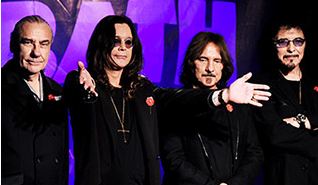
Black Sabbath, the defining heavy metal band from about 150 years ago, is back. These are the original four members. Amazingly, they are all still alive, which is good because I hate it when some oldies rock band does a reunion tour but only has one or two original members left. Why should I pay good money to go listen to what is essentially a cover band or an Ozzy Osbourne impersonator? Yes, I am referring to you Journey, Chicago, Grand Funk Railroad and Jefferson Starship, not to mention countless others who have done reunions with a fraction of the real band members on stage.
I am glad the Sabbath guys decided, after three decades, to crank it up one more time, but I won't go see them perform. Call me "paranoid," but I fear there will be one too many Spinal Tap moments in their shows, and I already have enough of those in my day-to-day life.
I am not sure metal lends itself to senior citizen reunions. Will anyone want to see 70-year-old Metallica members in leather screaming about things that, well, really aren't relevant anymore or are just pathetically redundant? I am still cool with ZZ Top rolling out in white beards (now age appropriate) and playing some great blues=based rock, but I am not as comfortable with the idea of Judas Priest telling me that I "have another thing coming." Heck, at this stage of life, those lyrics are just a form of kicking baby boomers when they're down.
I won't deny any band's right to wheel out the Marshall amplifiers and have some fun in their senior years. There is nothing like playing in front of a live audience at any age, and Sabbath still has a pretty loyal following and, I presume, the chops to pull it off. But please, Ozzy, no biting off the heads of birds or any other critter. Don't even pretend to do it. This isn't 1970. PETA will be all over your case, and I'll just cringe from embarrassment and have to explain myself (and my generation) to people half my age. Just play your music, enjoy the energy from the crowds and don't trash any hotel rooms.
Wednesday, November 9, 2011
Sobering election results in Va.
Virginia is a strange state. Folks here in the commonwealth elected one of the first black governors (Douglas Wilder) years ago, when it wasn't a popular thing to do elsewhere. It also elected Tea Party darling, Eric Cantor. It has a bunch of famous, intellectual presidents buried in its red-clay soil. Many universities are named after them and other home-grown leaders. Virginia is also the home of some of the least progressive thinkers in U.S. history. It has a warm-and-fuzzy, long-lasting marketing slogan to help boost tourism. And, until recently, it allowed people to smoke in restaurants. You can still carry a gun almost anywhere in the state, and also get one of the best educations available in the world.
Voters are fickle here, too. There seems to be no logic to how or when they vote, or what values they support from year to year. It's a big state with demographics that vary wildly. It's often unpredictable in its politics and legislation. It's local economies are uneven.
Loudoun County, in an area of Northern Virginia that traditionally leans left, now has an entirely Republican Board of Supervisors and a new Republican sheriff. And with the results of one election still pending, Richmond is on the verge of being ruled entirely by Republicans.
Yesterday's election results are disheartening to me, an on-and-off resident of Virginia for over 20 years. I want the state to be more progressive, or at least politically and socially balanced. I am embarrassed by the tobacco industry ruling Richmond for decades. Yet, I admire much of the history and beauty that can be seen throughout the state. It's a great thing to be able to go to a University of Virginia football game in Charlottesville and realize you're on the campus that Thomas Jefferson founded. Head over to Colonial Williamsburg or Yorktown in the Tidewater region and you will likely experience something uniquely Virginian.
But there are no more Jeffersons left in Virginia, only smaller and smaller minds encased in the skulls of leaders who want to make this a state where everyone only looks out for themselves. Our state and local leaders now speak to the wealthy and prey on the emotions of the uninformed. They don't warn of the dangers of greedy corporations, as Jefferson did. They romance big business and call for oil rigs to be constructed off of Virginia Beach. Virginia isn't for lovers anymore. It's for BP, factory farming and big-time lobbyists.
While some of the national results from Election Day are modestly encouraging, I am not feeling so good about Virginia. It's beginning to feel like a part of the country that is buying into all the Tea Party garbage and "Obama's a socialist" crap. Even Northern Virginia seems to be turning as red as the soil in the southern part of the state, which for an area as diverse as this, is quite alarming.
Over two-thirds of the registered voters did not vote yesterday. If that happens again in 2012, Obama will lose Virginia and empower conservatives in Richmond even more. It probably won't be long before Virginians are smoking up a storm in restaurants again, as the "Don't Tread on Me" slogan replaces the "Virginia is for Lovers" motto.
Subscribe to:
Posts (Atom)